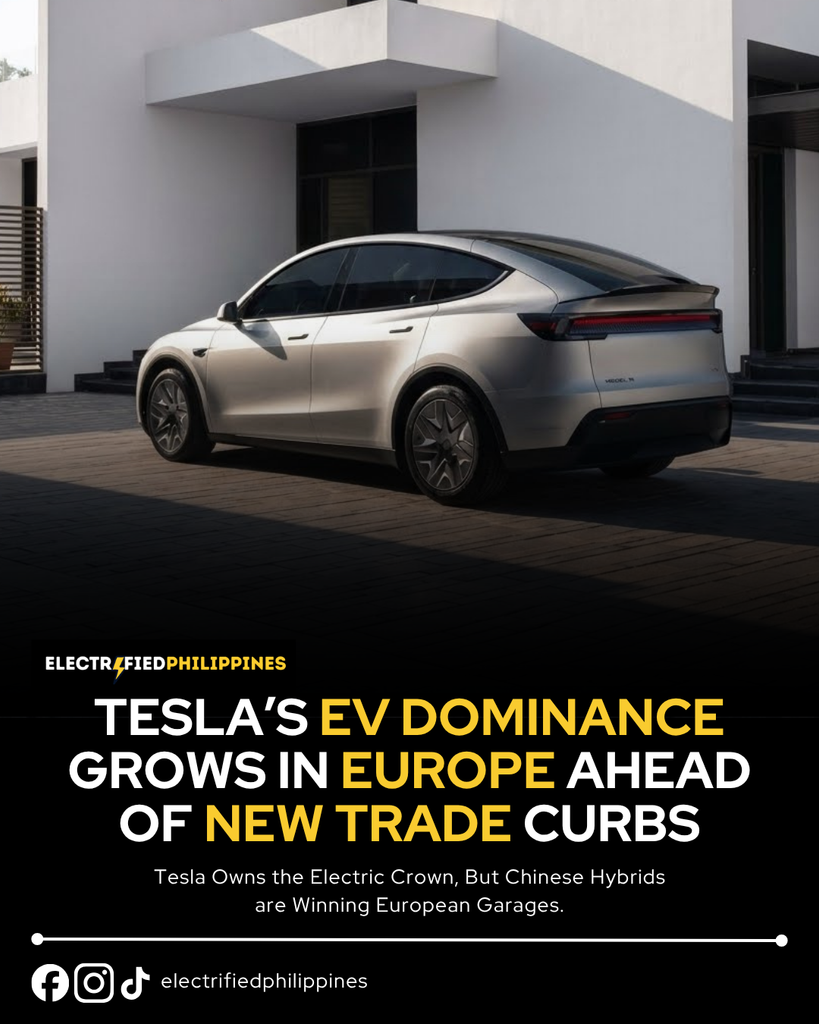
Tesla just widened its lead in the European EV market, turning a standard end-of-quarter delivery push into a massive September rout. Newly compiled data from Dataforce shows European electric vehicle sales surging 60 percent year-on-year to clear 408,000 registrations. That single-month spike dragged the total EV market share up to an impressive 30 percent. But the real story is how heavily that growth leaned on just two cars. Tesla’s Model Y and Model 3 essentially ran away with the market, coming within a hair of matching the combined volume of the next eight best-selling electric vehicles on the continent.
The heavy lifting belonged to the Model Y, which clinched the top spot with nearly 41,000 deliveries—a 55 percent jump over last year. Right behind it was the Model 3, which more than doubled its volume to cross 25,000 units. Between them, Tesla moved over 66,000 vehicles, falling just short of the combined total of its closest ten competitors. This wave of inventory was largely fed by Tesla’s Shanghai gigafactory. With domestic demand softening back home in China, the facility has quietly transformed into Europe’s primary EV supply line.
At the exact same time, Chinese automakers are executing a quiet flank of their own. Instead of fighting Tesla head-on in pure battery electrics, brands like BYD and Chery are aggressively capturing Europe’s plug-in hybrid (PHEV) market. The strategy is working. Chinese brands saw their European sales double compared to last September, pushing their monthly market share to a record 14.5 percent and bringing their year-to-date average to a comfortable 10.5 percent. By leaning heavily into hybrids, these manufacturers have found a highly effective backdoor into European garages.
But this double-pronged invasion faces a ticking clock. European lawmakers are pushing back with protective trade measures like the Industrial Accelerator Act, a framework designed to tie local EV incentives directly to local manufacturing. More pressing, however, is a recent proposal hammered out by European and Chinese trade negotiators. If finalized, the deal could slash future imports of plug-in and full hybrids by more than half, a clear sign that Europe is finally ready to protect its domestic engineering.